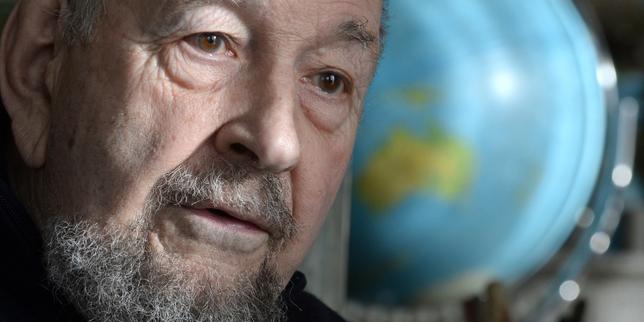
Geography isn't just about memorizing capital cities or tracing river deltas on a map. It's a weapon. If you doubt that, you've never read Yves Lacoste.
The legendary French geographer died on June 20, 2026, at the age of 96 in Bourg-la-Reine. He leaves behind a massive intellectual shift that dragged geography out of dusty academic closets and shoved it straight into the war rooms of global power. Long before modern pundits started using the word geopolitics to explain every conflict on social media, Lacoste rescued the term from historical disgrace and proved that space, terrain, and borders dictate who wins and who loses.
Most obituaries will tell you he was a brilliant academic. They'll list his university posts and his foundational texts. But that misses the point entirely. Lacoste was a disruptor who looked at a landscape and saw a battlefield, a tool of state control, and an instrument of resistance.
The Book That Scared the French Academy
To understand why Lacoste mattered, you have to go back to 1976. He published a slim, punchy book with a title that read like a slap in the face to his peers: La Géographie, ça sert, d’abord, à faire la guerre (Geography, First and Foremost, Is for Making War).
At the time, university geography in France was utterly boring. It was obsessed with classifying rock formations, measuring crop yields, and describing pastoral landscapes. It pretended to be neutral, scientific, and innocent.
Lacoste blew that illusion apart. He argued that this innocent schoolmaster geography was a smokescreen. The real geography, the one that mattered, was strategic knowledge used by states, militaries, and ruling classes to control territory and people. If citizens didn't understand how power used space, they'd always be at the mercy of those who did.
The academic establishment hated it. They didn't want to admit that their maps were political tools. But younger scholars and thinkers couldn't look away. Lacoste didn't just critique the system; he built an entirely new framework to analyze it. He founded the journal Hérodote the same year, creating a space for what he called radical geopolitics. It wasn't about abstract theories. It was about raw power rivalries over pieces of land.
Saving Geopolitics from the Ghost of Hitler
Before Lacoste came along, the word geopolitics was practically taboo in Europe. It was radioactive. During the 1930s and 1940s, German theorists like Karl Haushofer had twisted geopolitical concepts to justify Nazi expansionism and the pursuit of Lebensraum. After World War II, the Western intellectual elite abandoned the term, associating it entirely with fascist propaganda.
Lacoste single-handedly reclaimed the word. He argued that abandoning the study of spatial power dynamics because the Nazis misused it was an act of intellectual cowardice.
He redefined geopolitics away from state mysticism and grounded it in concrete realities. To Lacoste, geopolitics meant the study of power rivalries over territories, plain and simple. Crucially, he insisted that these rivalries happen at multiple levels simultaneously. You can't just look at global superpowers. You have to analyze the continental level, the national level, the regional level, and even the micro-local level of a single city neighborhood.
This multi-tiered approach changed everything. It allowed analysts to see how a local land dispute between farmers could morph into a national crisis or a global proxy war.
Forensics in the Mud of Vietnam
Lacoste wasn't an armchair theorist who stayed in Parisian cafes. He proved his methods in the line of fire. His breakout moment on the international stage came in 1972 during the Vietnam War.
The American military was carrying out a massive bombing campaign in the Red River Delta of North Vietnam. The US government claimed that any damage to the massive system of earthen dikes protecting the region was accidental, a mere byproduct of targeting military positions. They blamed subsequent catastrophic flooding on natural seasonal monsoons.
Lacoste didn't buy the official narrative. Armed with deep geographic knowledge, he analyzed the bombing patterns. He realized the American planes weren't hitting the tops of the dikes, which would look like an obvious attack. Instead, they were systematically striking the concave banks of river meanders and the base of the dikes.
This was a calculated, lethal strategy. By hitting these specific points, the bombs didn't immediately shatter the structures; they created internal fractures deep within the earthwork. When the monsoons arrived months later, the sheer weight of the rising water caused the weakened dikes to collapse from within. It allowed the US to weaponize nature while maintaining plausible deniability.
Lacoste published his spatial forensic analysis in Le Monde in June 1972. The article caused an international diplomatic firestorm. It exposed the Pentagon's environmental warfare tactics so clearly that the international pressure forced Washington to halt the bombing of the dikes. It was a stunning demonstration of what Lacoste preached: geography wasn't just a subject you studied; it was an active force in global survival.
From Morocco to the Third World
His worldview wasn't shaped by French lecture halls, but by his early life in North Africa. Born in Fez, Morocco, in 1929, he grew up watching the stark inequalities of the colonial system. His father was a geologist looking for oil, so the young Lacoste understood early on that what lies beneath the dirt directly shapes human politics.
He started his career teaching in Algiers during the early 1950s. He joined the communist movement and actively threw his support behind the Algerian independence struggle. He eventually broke with the French Communist Party because he felt their stance on Algerian liberation was too timid, showing the fierce independence that defined his entire life.
This intimate experience with colonialism led him to write extensively about underdevelopment. His 1965 book, Géographie du sous-développement, became a massive hit, translated into fifteen languages. He refused to treat the Third World as a monolith or a passive victim. Instead, he analyzed the specific regional structures, local elites, and geographic realities that kept certain populations trapped while others advanced.
Later, he courted controversy by challenging popular myths on both the right and the left. When he went to Cuba in 1973 to analyze Fidel Castro's guerrilla tactics in the Sierra Maestra, his conclusions upset orthodox Marxists. He noted that Castro didn't succeed because of some magical revolutionary properties of mountain geography, but because he found unexpected tactical alliances with local peasants who had been driven off the plains. Lacoste always warned against what he called "geographisms"—the lazy habit of treating a piece of land or a mountain range as if it were an independent political actor with its own will.
How to Apply Lacoste's Framework Today
If you want to understand the modern world through Lacoste's eyes, you have to stop looking at maps as static images. You need to start thinking about them as layered arguments. Lacoste's method requires looking at any conflict through three distinct lenses.
- The Material Reality: What are the actual physical traits of the land? Where are the chokepoints, the water sources, the mountains, and the energy corridors?
- The Representations: How do the people living there, and the powers fighting over it, imagine the land? What are the historical myths, the border grievances, and the emotional connections tied to that space? Lacoste knew that ideas about territory are just as powerful as the physical terrain itself.
- The Scale Shift: Never look at a conflict on just one map. Zoom out to see the global chess match, then zoom in to see the specific valley, the ethnic enclave, or the city street where the fighting actually happens.
Yves Lacoste didn't care about academic politeness. He cared about reality. His death marks the end of a generation of intellectuals who weren't afraid to get their boots muddy and challenge the state narratives of the world's most powerful militaries.
To honor his legacy, stop reading bloodless political commentary. Open an atlas, look at a disputed border, and ask yourself who profits from the way that line is drawn.