Don't let the sudden plunge in oil prices fool you into thinking the global energy crisis is completely over. When Donald Trump announced he was calling off planned military strikes and standing on the precipice of a peace deal with Tehran, the energy trading floors went into a frenzy.
Brent crude tanked, sliding from $93 a barrel overnight to briefly sit below $85 on Friday morning. It's the lowest price we've seen since the chaotic first week of the Iran crisis back in March. But if you think trading oil based on late-night presidential social media posts is a safe bet, you haven't been paying attention to how volatile this market really is. By Friday afternoon, prices bounced right back over $89 after Trump hit back at Iranian media leaks, warning Tehran that their leaked terms bore "no relation to the truth."
The real story isn't just a roller-coaster chart. It's about a desperate race against empty emergency reserves, shadow shipping lanes, and a vital global shipping lane that's finally starting to crack open.
The Chaos at the Strait of Hormuz
To understand why a few words from the Oval Office can wipe billions off global commodity values, you have to look at the geography.
The Strait of Hormuz is the world's most critical oil transit point. Roughly 20% of the world's petroleum flows through this narrow strip of water separating Oman and Iran. When the US-Israel conflict with Iran erupted in late February, Tehran effectively clamped a padlock on the strait. Maritime insurers pulled war-risk coverage, Iranian forces threatened commercial shipping, and the physical flow of oil stopped dead.
Prices instantly skyrocketed to $113 a barrel. The global economy only survived the initial shock because the International Energy Agency coordinated a massive release of 400 million barrels of emergency crude.
But those emergency stockpiles are running dangerously low. Energy executives have been quietly warning the White House behind closed doors that the commercial buffers are nearly gone. If the strait stays totally blocked, we aren't looking at $90 oil; we're looking at a spike past $150 and gas prices tearing past $5 a gallon at American pumps just before the midterm elections.
Shadow Fleets and Secret Overwatch Operations
While the diplomats argue, a quiet, dangerous game has been playing out in the dark. Oil prices didn't just drop because of Trump's latest remarks. They've been drifting downward for weeks due to two factors the mainstream financial press frequently overlooks: drop-offs in Chinese imports and the sudden rise of "dark transits" through the Gulf.
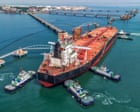
Trump recently bragged that the US has been executing a "secret mission" to shepherd over 200 tankers out of the blockaded channel at night with their transits turned off. While Energy Secretary Chris Wright looked a bit blindsided by the president's specific public numbers during a congressional hearing, maritime tracking data confirms something is happening.
The US military has been running overwatch operations. They use autonomous sea vehicles, aerial reconnaissance, and advanced drones to guide these shadow tankers through the southern territorial waters of Oman, keeping them clear of Iranian coastal batteries.
[Persian Gulf] -> [Tankers run dark (AIS off)] -> [US Drone Overwatch via Oman waters] -> [Open Ocean / Ship-to-Ship Transfer]
Once these vessels clear the danger zone, they conduct ship-to-ship cargo transfers in the open ocean and loop back to do it again. JPMorgan analysts estimate that June oil flows through Hormuz have crept up to 5.1 million barrels per day. That's a massive jump from the pathetic 2.2 million barrels per day moved in March, proving the chokehold is starting to loosen.
What the Proposed Peace Deal Actually Looks Like
Traders are frantically buying and selling because the outline of a potential Memorandum of Understanding is finally floating around European diplomatic circles. Trump wants a signing ceremony as early as this weekend.
But the sticking points are massive, and anyone betting on a smooth resolution is being naive.
- The Nuclear Requirement: Trump is demanding that Iran immediately hand over its enriched uranium to the United States to be transported out of the country and destroyed, or have it neutralized in place under the strict watch of international atomic monitors.
- The Iranian Demands: Tehran is dug in. Their Foreign Ministry spokesperson, Esmail Baghaei, insists nothing is finalized. They want billions in frozen overseas assets unlocked immediately and are demanding a halt to military operations against their proxies in the region, including Hezbollah in Lebanon.
It's a classic high-stakes poker game. Trump needs a victory to cool down inflation, which hit 4.2% last month on the back of soaring energy bills. The high prices act like a direct tax on consumers, and with the midterms looming, the political stakes couldn't be higher.
The Long Term Outlook for Your Wallet
If a deal gets signed this weekend and the Strait of Hormuz completely reopens, the physical oil market will exhale a massive sigh of relief.
Wall Street is already trying to time the bottom. Goldman Sachs released an update stating they still expect Brent crude to average around $90 a barrel for the final quarter of 2026, simply because countries will have to aggressively buy oil to refill those severely depleted emergency stockpiles. However, they trimmed their 2027 forecast down to $80, citing booming production from the Americas and the United Arab Emirates.
For the everyday consumer, this market volatility means gas station prices will remain erratic for the next few weeks. If you're managing corporate logistics, shipping goods, or just worrying about your monthly budget, don't assume the drop below $85 is permanent.
Your next steps should be defensive. If you operate a business reliant on fuel, lock in fuel hedges now while prices are depressed by the optimistic headlines. If you're an investor, look closely at the broader stock markets. Global indexes like the FTSE 100 and the S&P 500 have rallied hard on this peace talk momentum. But because this entire economic house of cards rests on an unpredictable diplomatic breakthrough, keep your energy positions flexible. One angry post on social media can send oil surging right back up.