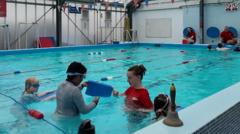
Kids are drowning because they can't swim. It's that simple, and it's completely preventable. Every year, local swimming clubs watch a terrifying trend grow. Children show up who don't even know how to float, let alone swim a length of a pool. Schools are supposed to handle this. In fact, national curriculums often mandate it. But the system is broken, budgets are dry, and the current approach to school water safety lessons is failing our kids.
We need to stop pretending that a couple of frantic weeks in a primary school pool makes a child safe around water. It doesn't.
The reality of school water safety lessons today
Most parents assume their children get proper swim instruction at school. They picture weekly lessons, structured coaching, and real progress. The reality is far less comforting.
Many schools squeeze their entire swimming curriculum into a single two-week block. Kids get rushed onto a bus, spend twenty minutes shivering in a crowded public pool, and then get rushed back. By the time they get used to the water, the block is over. That isn't learning. It's a checkbox exercise.
Local swim clubs are shouting about this because they see the fallout. Teachers are overwhelmed. Pools are closing across the country due to soaring energy costs. When a local council shuts down a public pool, schools lose their only access to water. The kids are the ones who pay the price.
Transport costs are killing swim programs
It isn't just pool availability that creates a barrier. It's the logistics. Hiring a coach bus to transport thirty children to a leisure center costs a fortune now. School budgets are stretched to the absolute limit. When a headteacher has to choose between buying new textbooks or funding swim transport, swimming often gets cut.
Some schools try to bypass the pool entirely. They teach water safety in a dry classroom. They use worksheets. They show videos of lifeguards. While knowing the flags on a beach is useful, a worksheet won't keep a child afloat when they fall into a freezing canal. You cannot learn to survive in water while sitting at a wooden desk.
Why open water changes the entire game
Swimming a neat lap in a warm, chlorinated indoor pool is one thing. Falling into a river is something else entirely. Cold water shock triggers an involuntary gasp reflex. If your head is underwater when that happens, you inhale water immediately.
Standard school water safety lessons rarely address the physical reality of open water. They teach the breaststroke. They don't teach how to combat the panic of sudden immersion.
- Cold water shock causes immediate hyperventilation.
- Currents can overpower even strong pool swimmers.
- Hidden debris under the surface causes impact injuries.
- Muddy banks make climbing out nearly impossible.
Clubs are pushing for a massive shift in how we approach this education. We need to teach survival skills first, and stroke technique second. Floating on your back until the initial shock passes is a skill that saves lives. Checking the depth before jumping in saves lives. These concepts need to be drilled into children until they become second nature.
What swim clubs want to see change right now
Volunteers and coaches at local clubs are tired of watching the same tragic headlines every summer. They want a complete overhaul of the current school framework.
First, water safety education must be continuous. It cannot be a single module done in Year 3 and then forgotten. Kids grow, their risk-taking behavior changes as they enter their teenage years, and their skills rust if they aren't used. Water competence needs regular reinforcement throughout both primary and secondary education.
Second, we need better funding specifically ring-fenced for pool access and transport. If the government mandates that swimming is a core part of physical education, they must provide the financial means to make it happen. Expecting cash-strapped schools to absorb the cost of rising pool hire rates is completely unrealistic.
Partnering with local experts
Schools don't have to invent these programs from scratch. Local swim clubs already have the infrastructure, the qualified coaches, and the passion. A closer partnership between schools and community clubs could bridge the gap.
Clubs can offer targeted tracking to identify children who are falling behind. If a child hits age ten and still cannot confidently swim twenty-five meters, that should trigger immediate support. Right now, those kids simply slip through the cracks. They graduate to secondary school without basic survival skills, and the risk multiplies as they get more independence.
The massive gap between passing a test and staying alive
There's a dangerous misconception about what it means to be safe in the water. Passing a school swim test usually means a child scraped through a single length of a quiet pool without touching the bottom. That child is still at high risk in a real-world scenario.
True water competence involves understanding environment-specific hazards. It means knowing how to spot a rip current at the beach. It means understanding that quarry water stays freezing cold even in the middle of a July heatwave.
When swim clubs call for more school water safety lessons, they aren't asking for more time spent perfecting a freestyle kick. They are asking for honest, rigorous education about risk. They want kids to understand that water is beautiful but indifferent. It doesn't care how good your grades are.
Practical steps parents can take today
Don't wait for the school system to fix itself. It might take years for policy and funding to catch up to reality. If you want to ensure your kids are genuinely safe, you have to take control of the situation yourself.
- Test their actual ability. Take your child to a local pool. Don't help them. See if they can tread water for two minutes straight without touching the wall. See if they can float comfortably on their back without panicking.
- Talk about open water explicitly. Next time you walk past a river or a lake, stop. Point out the steep banks. Discuss what would happen if someone fell in. Ask them what they would do. Make sure they know the golden rule: never jump in to save a dog or a friend. Call for help and look for a rescue line.
- Get involved with a local club. Community swim clubs are often much cheaper than private swim schools. They offer a community environment where water safety is part of the daily culture.
- Demand answers from your school. Ask the headteacher how many hours of pool time your child will actually get this year. Ask if they teach the physical effects of cold water shock. Raise it at the next parent-teacher meeting.
The current approach is leaving too many children vulnerable. We have the facilities, we have the expertise in our local communities, and we know exactly what works. It's time to stop treating water safety like an optional extra and start treating it like the life-or-death priority it actually is. Better school water safety lessons aren't a luxury item. They are a fundamental necessity.